
Luxury Outdoor Living Ideas for Bahamian Homes

Outdoor living is part of daily life in The Bahamas. A well-designed terrace, pool deck, garden lounge or covered dining area can make a home feel larger, more comfortable and more valuable. It can also create the kind of effortless island lifestyle that buyers, tenants and guests remember.
The key is to build for real Bahamian conditions. Sun, salt air, humidity, heavy rain and seasonal storms all affect how an outdoor space should be designed and constructed. Beautiful materials matter, but so do drainage, shade, ventilation, detailing and long-term durability.
At Riccitelli’s Construction, we approach outdoor spaces with the same care as the main structure of a home. The goal is simple: Where Quality Meets Luxury. That means refined design, practical construction, clear communication and trusted relationships from planning through completion.
Here are luxury outdoor living ideas for Bahamian homes that combine architectural appeal with lasting performance.

1. Create a covered outdoor room for year-round use
An open patio is useful. A covered outdoor room is far more flexible.
A well-planned covered terrace extends the living area of the home while protecting it from intense sun and passing rain. It can serve as an outdoor lounge, family dining area, entertainment space or quiet retreat.
The best designs feel like a natural continuation of the interior. Ceiling height, flooring transitions, lighting and furniture layout all influence how comfortable the space feels. Large openings, sliding doors or folding glass systems can help connect indoor and outdoor living without making the transition feel forced.
Practical benefits include:
More usable living space without changing the full footprint of the home
Better shade and comfort during hot afternoons
Protection for outdoor furniture and finishes
A stronger connection between the home, pool, garden and view
For Bahamian homes, roof design and water management are critical. A covered terrace needs proper slope, gutters, downspouts and drainage routes. Materials should resist moisture and corrosion. Fasteners, framing connections and exterior fixtures should be selected with salt air in mind, especially for coastal properties.
From a construction standpoint, this kind of addition requires careful coordination. The new roofline should relate cleanly to the existing home. Electrical, lighting, fans, speakers and plumbing should be planned before finishes begin. Good scheduling also matters, since outdoor work can be affected by weather and material lead times.
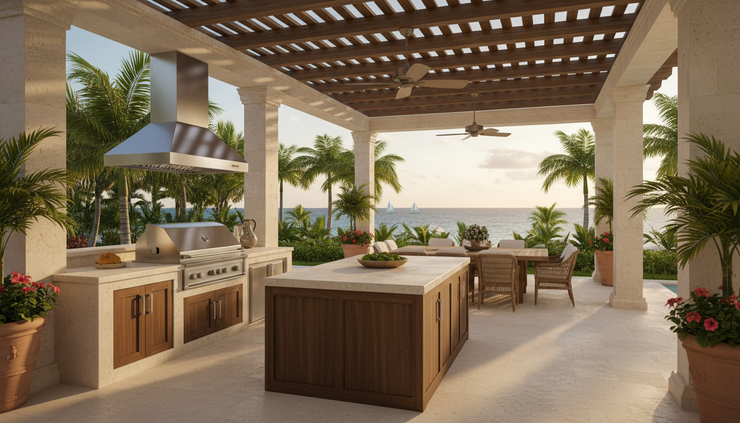
2. Build an outdoor kitchen that can handle island living
An outdoor kitchen brings hospitality outside. For many Bahamian homes, it becomes the center of weekend gatherings, family meals and guest entertainment.
The most successful outdoor kitchens are not simply grills set into countertops. They are planned work zones with cooking, prep, serving, storage and cleanup in mind. A built-in grill, sink, undercounter refrigerator, ice storage and weather-resistant cabinetry can make the space easier to use and maintain.
Durability should guide every choice. Countertops, cabinet materials, appliances and hardware must perform in heat, humidity and salt air. Natural stone can look beautiful, but some stones need sealing and regular care. Porcelain slabs, concrete, stainless steel and selected engineered materials may offer strong performance when specified correctly.
A professional construction team will look closely at:
Proper ventilation around cooking areas
Safe gas and electrical connections
Drainage near wet zones
Non-slip flooring around food and pool areas
Lighting for evening use
Clear circulation between the kitchen, dining area and interior kitchen
An outdoor kitchen can also support property value because it adds a clear lifestyle feature. For vacation homes, rental villas and hospitality-driven properties, the ability to cook and entertain outdoors can increase the appeal of the home without making the interior work harder than necessary.
3. Design a pool deck that feels elegant and performs safely
A pool is often the visual anchor of a Bahamian outdoor space. The deck around it determines how the entire area feels and functions.
A luxury pool deck should be comfortable underfoot, safe when wet and visually connected to the home. It should allow enough space for loungers, shaded seating, walking paths and service access. A beautiful pool with a cramped or slippery deck will never perform as well as it should.
Material selection is one of the most important decisions. Some materials absorb heat quickly, which can make them uncomfortable in strong sun. Others become slippery when wet or require more maintenance than expected. For a tropical climate, non-slip texture, drainage, heat comfort and resistance to staining all deserve attention.
Popular design directions include:
Large-format porcelain pavers for a clean, modern look
Natural stone with the right finish and maintenance plan
Concrete pavers selected for texture and drainage
Timber-look materials where real wood may be difficult to maintain
The construction details behind the finish are just as important as the finish itself. Proper grading helps move water away from the home and pool structures. Expansion joints, edge details and substrate preparation affect long-term performance. Pool coping must be installed with care, since it is both a design feature and a safety element.
Lighting should also be part of the early plan. Step lights, path lights and soft landscape lighting can make the pool area safer and more inviting at night. The electrical work must be coordinated with pool equipment, outdoor kitchen needs and future maintenance access.
4. Add shaded lounging areas with pergolas, cabanas and screens
Shade is not a luxury in The Bahamas. It is a core part of comfort.
Pergolas, cabanas and shade structures can make an outdoor space usable for longer parts of the day. They also help define zones within a larger garden or pool area. A cabana near the pool can feel private and resort-like. A pergola over a lounge area can soften the architecture and create a more intimate place to gather.
The design should respond to sun direction, prevailing breezes and how the property is used. A shade structure placed in the wrong location may look attractive but fail during the hottest hours. With the right planning, it can reduce glare, protect seating areas and create an outdoor destination away from the main house.
For a more refined result, consider details such as:
Integrated lighting
Ceiling fans rated for outdoor use
Concealed drainage
Built-in benches or storage
Privacy screens
Durable exterior fabrics
In coastal environments, exposed structures need strong material choices. Powder-coated aluminum, selected hardwoods, treated framing and corrosion-resistant fixings should be evaluated based on the location and maintenance expectations. If the structure is near the sea, the specification must be even more careful.
Construction planning should include foundations, wind exposure, service access and permits where required. A shade structure may appear simple, but it still needs proper anchoring and coordination with landscape, pool and electrical work.

5. Use landscaping to frame the architecture and improve privacy
Landscaping should do more than fill empty space. It should shape the outdoor experience.
In Bahamian homes, the best landscape designs frame views, soften hard surfaces, guide movement and create privacy. Planting can help screen neighboring properties, define outdoor rooms and add a sense of arrival at the entrance.
A strong landscape plan considers the way the home looks from multiple points: the driveway, front entry, pool deck, terrace, bedrooms and guest areas. It also considers maintenance. Tropical planting can be lush and beautiful, but plant selection should reflect the site, irrigation needs, salt exposure and long-term care.
Design ideas that work well include:
Layered planting along property edges for privacy
Palms and sculptural plants to frame views
Low planting near pool decks to reduce debris
Gravel, stepping stones or pavers for garden paths
Raised planters to define dining and lounge areas
Native or climate-suitable plants where appropriate
Landscaping also affects drainage. Poor grading can push water toward the home, pool or boundary walls. Proper site preparation, soil levels and drainage routes should be coordinated before final planting begins.
For investors and property managers, landscaping can improve first impressions with relatively visible impact. A clean, well-built entry sequence, healthy planting and thoughtful lighting can help a property feel cared for before anyone steps inside.
6. Upgrade outdoor lighting for beauty, safety and evening use
Outdoor living should not end at sunset. Lighting changes how a home feels at night and makes exterior areas safer to use.
The most elegant lighting plans are layered. Rather than using one bright floodlight, they combine subtle sources that serve different purposes. Path lights guide movement. Step lights improve safety. Wall lights add depth. Landscape lighting highlights trees, textured walls and architectural features. Pool and terrace lighting create atmosphere without glare.
Good lighting can also help separate zones. A dining area may need warmer, more focused light. A pool deck may need low, even lighting for safe walking. A garden path can use softer fixtures that guide without overpowering the landscape.
In The Bahamas, outdoor fixtures must be chosen carefully. Salt air and moisture can damage poor-quality fittings quickly. Fixture ratings, finishes, wiring methods and access for maintenance all matter. A beautiful fixture that fails early is not a luxury result.
Professional coordination is especially important for lighting because the work touches several trades. Electrical rough-in, masonry, decking, landscaping and ceiling details must align. If lighting is planned too late, the design may require surface-mounted conduit or visible compromises.
A well-built lighting plan should feel effortless when complete. The construction behind it should be anything but accidental.

7. Choose exterior materials that balance luxury and longevity
Outdoor living spaces succeed or fail based on material choices. A finish that looks excellent on installation day must also handle real use.
For Bahamian properties, construction materials face sun exposure, humidity, wind-driven rain and salt air. That means every selection should be made with performance in mind. Flooring, cladding, ceilings, railings, cabinetry, countertops, hardware and paint systems all need the right specification.
Luxury does not always mean delicate. In outdoor construction, true luxury often comes from materials that look refined and age well.
Strong options may include:
Porcelain or natural stone flooring with proper slip resistance
Marine-grade or corrosion-resistant stainless hardware where needed
Exterior-rated ceiling materials that resist moisture movement
High-quality coatings suited for tropical exposure
Durable cabinetry designed for outdoor kitchens
Well-detailed concrete, masonry and stonework
The installation matters just as much as the product. Even high-end materials can fail if substrates are not prepared, movement joints are ignored or drainage is poorly managed. Skilled construction protects the investment behind the visible finish.
For developers and property owners, this is where long-term value is created. Buyers may notice the design first, but they remember how solid the property feels. Property managers notice how well it holds up. Guests notice comfort, safety and ease of use.
That is why Riccitelli’s Construction places equal value on design intent and build quality. The finish should look exceptional, and the structure behind it should be built with discipline.
Planning a luxury outdoor renovation the right way
A successful outdoor living project starts long before construction begins. The planning process should set the direction, budget, schedule and responsibilities clearly.
The first step is to understand how the outdoor space will be used. A family home, vacation property, rental villa and boutique development may all need different priorities. Some projects focus on entertaining. Others need low maintenance, privacy, guest flow or stronger curb appeal.
From there, the team can review site conditions, existing structures, drainage, utilities, access and code requirements. This helps avoid surprises once work begins.
A strong pre-construction process should address:
Planning focus | Why it matters |
Site access | Outdoor renovations often require material movement, equipment staging and protection of existing finishes. |
Material lead times | Specialty stone, fixtures, appliances and custom features may need early ordering. |
Weather planning | Rain and storms can affect excavation, concrete work, finishes and scheduling. |
Trade coordination | Pool, landscape, electrical, plumbing, masonry and carpentry work must follow the right sequence. |
Maintenance needs | The finished space should be practical to clean, service and manage over time. |
Clear communication is part of quality construction. Owners and project teams should understand what is being built, when decisions are needed and how each phase affects the next. This reduces confusion and helps protect the final result.
Luxury outdoor living is not created by decoration alone. It comes from thoughtful planning, durable construction and details that make the home easier to enjoy.
Build an outdoor space that feels beautiful and built to last
The best Bahamian outdoor spaces feel relaxed, elegant and natural to use. They provide shade, invite breezes, handle weather and support the way people gather. They also respect the demands of a tropical climate.
A covered terrace, outdoor kitchen, refined pool deck, shaded cabana, strong landscape plan, layered lighting and durable materials can transform how a property lives. Each idea adds beauty, but the practical benefits matter just as much. Comfort, safety, maintenance, durability and property value all depend on the quality of the planning and construction.
Riccitelli’s Construction brings a professional, detail-focused approach to every stage of the process. Quality construction. Clear communication. Trusted relationships. That is the foundation of our philosophy, Where Quality Meets Luxury.
If you are planning a custom outdoor living space, a luxury renovation or a property upgrade in The Bahamas, take the next step with a team that understands both design and construction.
Explore Our Work to see how thoughtful craftsmanship shapes exceptional properties.
Request a Consultation to begin planning an outdoor living space built for beauty, comfort and long-term performance.
Comments